


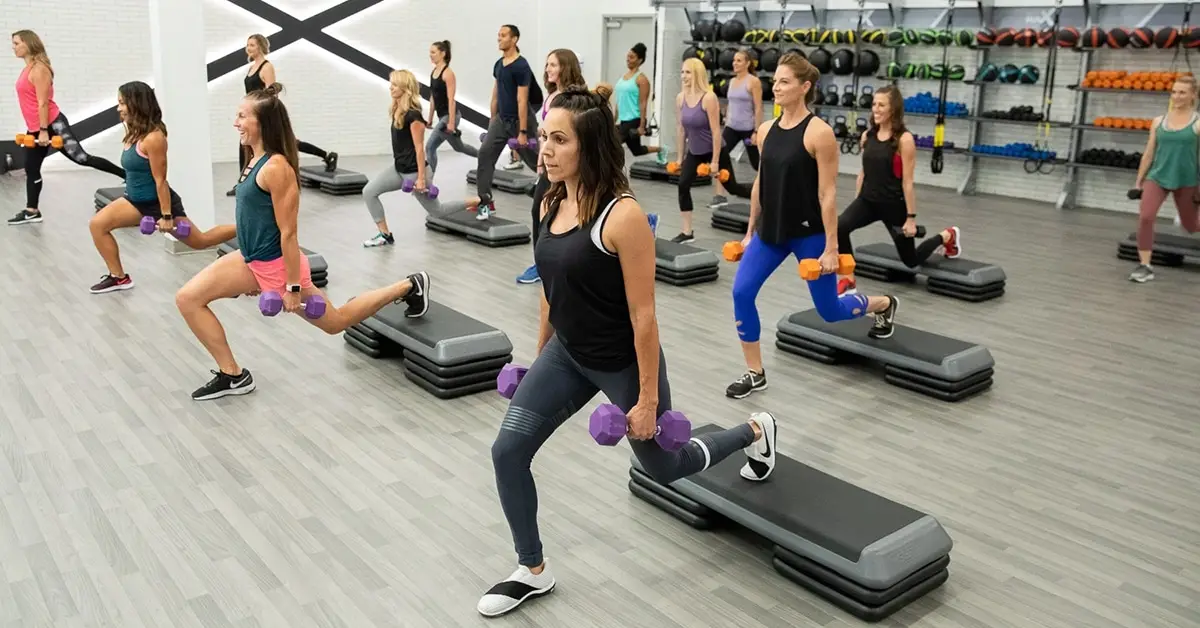
Injury is the most disruptive variable in any long-term fitness programme. A single significant training injury can eliminate weeks or months of training time, reverse adaptation that took years to build, and in the worst cases, create structural limitations that alter the trajectory of a member’s entire training career. Understanding why coached workout classes produce lower injury rates than self-directed training in equivalent population groups provides a compelling safety argument for group fitness participation that goes beyond the motivation and adherence benefits most commonly cited.
The Injury Risk Landscape in Self-Directed Training
Self-directed training produces injuries through several mechanisms that are largely absent from well-coached group fitness environments.
Technique Degradation Without External Feedback
The most fundamental injury risk of self-directed training is technique degradation without corrective feedback. Movement quality in self-directed training is monitored only by the trainee’s own internal awareness, which is subject to the significant limitation that people cannot reliably assess their own movement quality in real time, particularly as fatigue increases during a session.
Research on self-assessment of movement quality consistently shows that exercisers overestimate the quality of their movement execution and fail to detect technique degradation that external observers identify clearly. A self-directed trainer who believes their squat form is acceptable when their knees are caving significantly under load, because the sensation of the movement feels normal to them through years of habitual execution, will continue loading a compromised movement pattern until the accumulated stress produces a symptomatic injury.
Coached workout classes provide the external observation that self-directed training lacks. An instructor who observes a participant’s technique degrading under fatigue can intervene with a corrective cue, a load reduction suggestion, or a movement modification that prevents the training stress from accumulating to injury-producing levels.
Inappropriate Load Progression
Self-directed load progression is vulnerable to the ego-driven overestimation of readiness that leads to premature loading increases. A member who has completed a successful session at a given load is psychologically motivated to progress immediately, regardless of whether the adaptation required to support the next loading increment has been achieved.
Coached workout class formats manage load progression for participants by prescribing specific resistance levels and repetition counts that are calibrated to the class’s adaptation target rather than to any individual participant’s competitive impulse. This external load prescription removes the ego component from the loading decision, producing more conservative and physiologically appropriate progression rates than self-direction typically achieves.
Warm-Up and Movement Preparation Adequacy
Self-directed warm-ups in gym environments are notoriously inadequate. Members typically spend between two and seven minutes warming up before independent training, which is insufficient for meaningful tissue temperature elevation, movement pattern preparation, or neuromuscular activation relevant to the training session demands.
Coached workout classes include structured warm-ups designed by the instructor to prepare specifically the movement patterns and physiological systems the class will demand. Class warm-ups are typically twelve to fifteen minutes in well-programmed Singapore formats, providing meaningful tissue temperature elevation, dynamic mobility through relevant movement ranges, and the neuromuscular activation that reduces injury risk during the subsequent high-demand work.
The Competency Floor Effect of Class Instruction
A subtle but important injury risk reduction mechanism in coached workout classes is what exercise scientists describe as the competency floor effect: the minimum movement quality standard that instructor cueing and class culture maintains across all participants.
In a coached class environment, participants whose technique falls below an acceptable standard receive corrective intervention from the instructor before the substandard technique produces injury. This competency floor does not exist in self-directed training, where there is no mechanism to prevent a member from continuing to load movement patterns that a qualified observer would recognise as injury-imminent.
True Fitness Singapore maintains rigorous instructor qualification and class delivery standards that ensure the competency floor of its coached workout classes provides genuine injury risk protection for members at all experience levels. True Fitness Singapore invests in instructor training that develops the observational skills and intervention competency that make coached classes meaningfully safer than self-directed training alternatives.
FAQs
Q. – I have had injuries during workout classes in Singapore despite the coaching environment. Does this mean the injury risk reduction argument is overstated?
Ans. – Coached workout classes reduce injury risk relative to self-directed training but do not eliminate it entirely. Several factors can produce injuries within coached class environments: class sizes that are too large for the instructor to provide adequate individual attention, instructors whose observation and intervention skills are insufficiently developed, participants who ignore or override instructor modification suggestions, and class programming that applies inappropriate loads or volumes to certain participant populations. If you have experienced injuries in coached class environments, examining which of these factors may have been present is more productive than concluding that coaching provides no protective benefit.
Q. – How does class size affect the injury protection benefits of coached workout classes in Singapore?
Ans. – Class size is one of the most significant determinants of how much individual injury protection a coached class environment provides. In small group formats of five to twelve participants, instructors can observe and cue each individual multiple times per class, providing near-personal-training levels of technique monitoring. In large group formats of thirty or more, individual observation is limited and participants whose technique is substandard may complete an entire class without receiving corrective intervention. Premium Singapore gyms that cap class sizes to maintain instructable group sizes provide stronger injury risk protection than those that maximise revenue by filling classes to maximum capacity regardless of instructional quality implications.
Q. – My workout class instructor never corrects my technique. Should I assume my technique is acceptable or seek feedback proactively?
Ans. – Do not assume that absence of correction indicates technique acceptability. Instructor corrections in large group classes are distributed across many participants, and any individual may receive infrequent specific feedback regardless of their technique quality. Proactively seeking feedback by arriving a few minutes early to ask the instructor to observe a specific movement, recording your own execution for self-review, or booking a personal training session specifically for movement assessment are more reliable techniques for ensuring your form is within acceptable standards than relying on the absence of unsolicited correction.
Q. – Are some workout class formats inherently higher risk for injury than others?
Ans. – Yes, and the injury risk hierarchy correlates broadly with the technical complexity and loading demands of the format. Formats involving ballistic movements including jumping and bounding have higher impact injury risk from landing mechanics errors. Formats involving heavy barbell loading have higher musculoskeletal injury risk from technique breakdown under load. Formats involving continuous high-repetition cardiovascular movement have higher overuse injury risk from accumulated repetitive stress. Lower-intensity formats including yoga and moderate resistance classes have correspondingly lower acute injury risk. This hierarchy does not mean that higher-risk formats should be avoided, but that the coaching quality and class structure standards in these formats need to be proportionately higher to manage the elevated technical demands.
Q. – Should I inform my workout class instructor about a previous injury before every class, or only once?
Ans. – Informing the instructor before your first attendance at any class format, and re-informing when your injury history changes or when a previous injury has been flaring recently, is the appropriate standard. Instructors in Singapore’s premium gyms see many participants across many classes and cannot reliably retain detailed individual injury histories without systematic documentation. Treating the pre-class instructor briefing as a professional communication rather than an unnecessary disclosure ensures that the instructor can provide appropriate exercise modifications throughout the class without the member needing to manage their own modifications independently under time pressure during the session.
